
Most homeowners never think about their crawl space until something goes wrong. By then, humidity has usually been doing damage for months, sometimes years. The problem is that crawl spaces are out of sight and out of mind, and high humidity rarely announces itself loudly. It works quietly: softening wood, feeding mold, weakening the structure beneath your feet.
The good news is that crawl space humidity leaves clues. You just have to know what to look for.
Here are the three most common signs that your crawl space is too humid, plus what to do about it before the damage gets serious.
Sign 1: Condensation and Visible Moisture
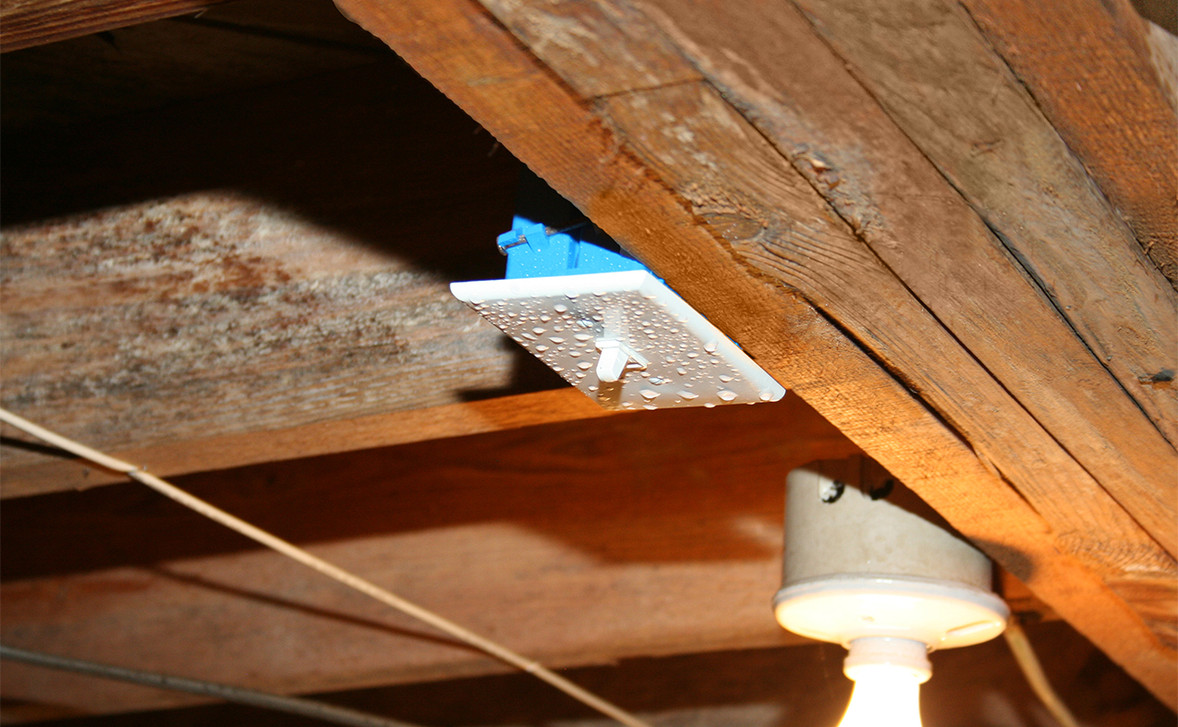
The most obvious sign of a humidity problem is moisture you can see. When warm, humid air meets cooler surfaces inside a crawl space, it condenses into water droplets, the same way a cold glass sweats on a hot day. You might notice this as:
- Water droplets or wet streaks on the concrete block walls or foundation walls
- Moisture beading on cold water supply pipes
- Damp or wet insulation hanging from the floor joists above
- A thin film of water on the vapor barrier, if one exists
- Discoloration or dark staining on wood framing
Even a small amount of persistent condensation is a problem. Water sitting on wood sets the stage for wood rot and mold. Water on pipes can accelerate rust or mineral buildup. Wet insulation loses its insulating value, sometimes permanently.
If you notice condensation during a crawl space inspection, take it seriously. It's a reliable sign that humidity is already high enough to be a problem.
Do not confuse condensation with a plumbing leak. Run your hand along a wet pipe. If the moisture is on the outside of the pipe and you can't find an active drip, it's condensation. A leak will have visible water flowing or pooling from a joint or crack.
Sign 2: Musty Odors
If your home has a persistent musty or earthy smell that you can't trace to a specific source, your crawl space is the first place to investigate. That distinctive damp, stale odor is one of the most reliable early warning signs of a moisture problem, and it travels.
Crawl spaces are not sealed off from living spaces as completely as most people assume. Air naturally moves upward through your home due to stack effect. This means air that has been sitting in a humid crawl space finds its way into your floors, walls, and living areas. The smell comes with it.
The source of the musty odor is almost always mold or mildew. Both thrive in humid conditions, and both produce microbial volatile organic compounds, the compounds responsible for that recognizable smell. Mold can begin growing on wood surfaces within 24 to 48 hours of sustained humidity above 70% RH. Mildew grows even faster.
You don't need to see visible mold to have a mold problem. Mold often starts in places that are hard to inspect: the underside of floor joists, behind insulation, inside wall cavities, and on the dirt floor itself if there is no vapor barrier installed.
Pay attention to where in your home the smell is strongest. If it's more noticeable near floor level (especially hardwood floors, floor vents, or first-floor rooms), the source is almost certainly below. Basements and crawl spaces are the typical origin points.
If the smell appears or worsens after rain, that's a strong indicator that water is entering the crawl space from outside, either through the foundation walls or through the ground itself. Addressing the exterior water management is an important part of the fix. Address the source of water entry before working on humidity control inside.
Sign 3: Structural Symptoms: Wood Rot, Sagging Floors, and Mold on Joists
When humidity in a crawl space goes unaddressed long enough, the damage eventually becomes structural. This is the point where repair costs rise significantly and the problem moves from a nuisance into a genuine safety concern.
Wood rot occurs when wood-destroying fungi colonize damp wood. Fungi need moisture to survive, specifically wood moisture content above 19 to 20 percent. In a healthy, dry crawl space, wood moisture content typically runs between 12 and 16 percent. In a humid, poorly protected crawl space, that number can climb well above the threshold for decay.
There are two main types of wood rot you might encounter:
- White rot breaks down the structural fibers of wood, leaving it soft, spongy, and stringy. It tends to look bleached or whitish.
- Brown rot (also called dry rot, despite needing moisture to start) causes wood to crack across the grain and crumble into cube-shaped pieces. This type is particularly destructive to structural lumber.
Either type of rot in your floor joists, sill plates, or beams is a serious problem that requires both a structural repair and a moisture correction.
Sagging floors are a downstream symptom of wood rot and structural softening. If you notice that your floors feel spongy underfoot, bounce when you walk, or have developed visible dips or soft spots, inspect the crawl space directly below those areas. Sagging is often the first sign a homeowner notices because it affects daily life. By the time floors are sagging, the wood damage is already significant.
Mold on joists is common in humid crawl spaces and appears as dark gray, black, green, or white fuzzy growth on the surface of wood framing. Some mold species visible in crawl spaces are surface-level and relatively easy to remediate. Others penetrate deeper into the wood and require professional treatment. Either way, visible mold in a crawl space confirms that humidity levels have been too high for an extended period.
Do not ignore mold on structural wood. Beyond the structural concern, mold spores circulate through the air in your home and can affect air quality for everyone living there.
How to Measure Crawl Space Humidity
Before you can fix a humidity problem, you need to know how bad it is. Guessing from symptoms alone is not enough. You need a measurement.
Two tools are useful here:
1. A hygrometer (digital humidity meter) A hygrometer measures relative humidity (RH) in the air and is the primary tool for monitoring crawl space conditions. Place it in the crawl space and leave it long enough to adjust to the conditions before taking your reading. For a better picture, check readings across seasons. Summer is typically the worst for crawl space humidity in most of the U.S. Crawlspace Depot carries crawl space humidity monitors and sensors suited for crawl space inspections and monitoring.
2. A wood moisture meter A wood moisture meter measures moisture content inside wood itself. Press the probes against the surface of a floor joist or beam and get a percentage reading of the moisture held within the material. If readings come back above 18 to 19 percent, you're in the range where wood rot and mold growth become a serious risk. Wood moisture meters are a common tool used by home inspectors and crawl space contractors during assessments and are worth being aware of if you're getting a professional evaluation.
Used together, these tools give you a complete picture: how humid the air is and what effect that moisture is already having on the wood structure.
What Humidity Level Is Too High?
As a general rule of thumb, here's how to interpret what you're seeing:
- Below 50% RH: Generally a healthy range. Most mold cannot grow at these levels, and wood stays dry. That said, very low humidity has its own downsides. Wood can dry out, shrink, and crack. The goal is a stable, healthy range, not simply pushing humidity as low as possible.
- 50–60% RH: Worth paying attention to. Mold growth is possible, especially with organic material present. Monitor over time rather than acting on a single reading.
- Above 60% RH: In many cases, conditions are becoming favorable for mold growth and elevated wood moisture content. The risk increases with temperature. For example, 60% RH at 80°F carries meaningfully higher risk than 60% RH at 50°F.
- Above 70% RH: Serious concern. Active mold growth is likely, and wood damage risk is elevated.
A few important caveats: these are guidelines, not exact thresholds. Temperature matters significantly. The same RH reading represents different real-world risk depending on conditions. In a vented crawl space, a single reading can also be misleading. Humidity varies dramatically day to day, during rain events, and across seasons. One measurement is a starting point, not a definitive answer. An encapsulated crawl space tends to be far more stable, so readings there give you a more reliable picture.
Most crawl spaces without moisture control fall into the 70–90% RH range during summer months. A well-managed, encapsulated crawl space should generally stay at or below 55% RH year-round.
What to Do About It
Crawl space humidity is a controllable problem, but it requires addressing two things: blocking moisture from entering and removing moisture that's already there.
Step 1: Install a vapor barrier
The ground beneath your crawl space is one of the primary sources of moisture. Even soil that appears dry releases water vapor constantly through evaporation. A high-quality vapor barrier installed across the crawl space floor blocks ground moisture from evaporating into the space above. This is the foundational fix. Without it, no amount of ventilation or dehumidification will keep up with the continuous moisture input from the ground.
Choosing the right vapor barrier matters. Thickness, reinforcement type, and your specific ground conditions all play a role in finding the best fit. See our Vapor Barrier Selection Guide for help choosing the right option for your crawl space. The barrier should overlap at seams by at least 12 inches and extend up the walls, sealed to the foundation.
Step 2: Add a crawl space dehumidifier
Even with a vapor barrier in place, ambient air humidity and seasonal moisture can keep RH elevated. A crawl space dehumidifier designed for below-grade use controls the air moisture directly, maintaining ideal RH levels year-round.
Crawl space dehumidifiers are different from household units. They are built to operate in lower temperatures, higher humidity conditions, and confined spaces. They typically drain automatically via a hose rather than requiring a reservoir to be emptied. Sized correctly for your square footage, a crawl space dehumidifier will hold RH in the appropriate range regardless of outside conditions.
Together, a vapor barrier and a dehumidifier are the core of crawl space encapsulation. A properly encapsulated crawl space keeps humidity stable year-round instead of fluctuating with outdoor conditions. For most homeowners dealing with a persistent humidity problem, encapsulation is the right long-term answer.
When to Call a Professional
DIY moisture control is well within reach for many homeowners. But some situations call for a professional:
- Visible standing water in the crawl space after rain. This indicates a drainage problem that needs to be corrected before any moisture control work is done.
- Significant wood rot in structural members (floor joists, beams, sill plates). This requires a structural repair alongside the moisture fix.
- Extensive mold growth covering large areas of wood. Professional mold remediation may be required before encapsulation.
- Water intrusion through foundation walls. This is a waterproofing issue that needs to be addressed at the source.
If you're not sure what you're dealing with, start with a thorough crawl space inspection. Bring a flashlight, knee pads, and a hygrometer. Document what you find with photos. That information will help you scope the repair accurately, whether you're doing it yourself or getting quotes from contractors.
Take Action Before the Problem Gets Worse
Crawl space humidity is a problem that does not get better on its own. Left unchecked, it progresses from condensation to mold to structural damage, with repair costs increasing at every stage.
If you've found any of the three signs above, now is the time to act. Start with the right materials: a quality vapor barrier and a properly sized crawl space dehumidifier are the two tools that will get your crawl space under control and keep it that way.
Have questions about your specific situation? Browse the Crawlspace Depot product pages or contact us directly. We're here to help you find the right solution.