
Crawl Space Vapor Barrier Buying Guide
How to Choose the Right Crawl Space Vapor Barrier
If you've started shopping for a crawl space vapor barrier and found yourself staring at a list of options ranging from 8 mil to 20 mil with words like "reinforced" and "woven-coated" sprinkled in, you're not alone. It's a lot more options than most people expect.
The good news: this decision is simpler than it looks. Here's the honest answer before we even get into the details - any reinforced vapor barrier 8 mil or thicker, installed correctly, will do a wonderful job protecting your crawl space. The differences between them are real, but they're not the difference between success and failure. They're about matching the right product to your specific situation.
This guide walks you through the key decisions so you can narrow down your options and buy with confidence.
What a Vapor Barrier Actually Does
Before we get into products, a quick foundation.
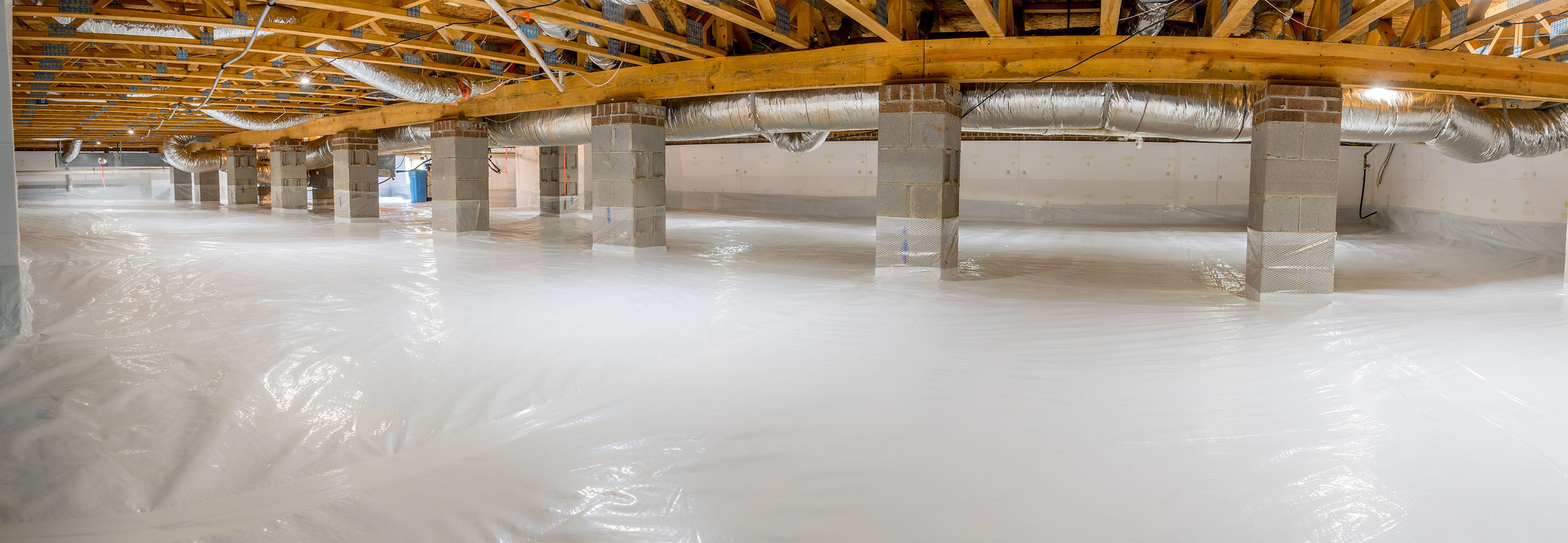
Your crawl space floor is soil, and soil releases moisture constantly. That moisture vapor rises up into your floor joists, insulation, and eventually the living space above - contributing to wood rot, mold, elevated humidity, and poor air quality. A vapor barrier installed on the crawl space floor (and up the foundation walls) blocks that moisture at the source.
This is the foundation of any crawl space encapsulation project, and it's one of the most straightforward, high-impact improvements you can make to a home.
Now, on to choosing the right one.
The Two Things That Matter Most
When you're choosing a vapor barrier, there are two decisions that actually drive the outcome: construction type and thickness. Everything else flows from these two.
Construction Type: Reinforced vs. Non-Reinforced
Crawl space vapor barriers come in two main construction types. Understanding the difference makes everything else click.
Reinforced vapor barriers are multi-layer materials - polyethylene bonded with an internal reinforcing structure, either a string mesh (sometimes called string-reinforced) or woven high-density fibers that are then coated with virgin polyethylene (known as woven-coated). That internal structure is the key. It distributes stress across the material and prevents small punctures from becoming large tears. If you snag a reinforced barrier on a rock or a nail, it resists spreading. This is why reinforced products are the standard choice for encapsulation.
Non-reinforced vapor barriers are polyethylene without an internal reinforcing structure. They perform the same core job - blocking moisture vapor - but without the reinforcing layer, their durability is determined entirely by thickness alone. They tend to be more affordable, and they work. The 10 mil non-reinforced is a proven option for crawl spaces with smooth, relatively clean ground. What you give up is the tear-resistance that reinforced materials provide, and long-term longevity is somewhat lower compared to reinforced products of similar thickness.
For most crawl space encapsulation projects, a reinforced vapor barrier is the right starting point.
Thickness: What It Actually Means
Thickness is measured in mils (one mil = one thousandth of an inch). The range you'll encounter for encapsulation runs from 8 mil on the lighter end up to 20 mil at the heavy-duty end.
Here's the key thing to understand: thickness primarily determines puncture resistance, not moisture blocking performance. A quality vapor barrier at 8 mil blocks moisture vapor just as effectively as one at 20 mil. What changes with thickness is how well the material holds up against whatever is on your crawl space floor - rocks, construction debris, rough soil, foot traffic over time.
So when you're thinking about thickness, the question to ask is: what am I laying this down on?
Finding the Right Product for Your Situation
Rather than ranking products from good to best, here's a more useful way to think about it: start with the most popular and proven option, then adjust based on your specific conditions.
The Most Popular Starting Point: 12 Mil Reinforced
The 12 mil reinforced black-and-white vapor barrier is the most popular product we sell, and for good reason. It works in almost any situation - typical soil, moderate debris, occasional foot traffic for maintenance and inspections. It's substantial enough to handle real-world crawl space conditions without being difficult to work with. If you're not sure what to get and your crawl space doesn't have unusual conditions, this is a very safe, proven choice.
It's available in 12' x 100' rolls (standard for most projects) and also in 4' x 100' rolls, which are particularly useful for running material up foundation walls, around piers, and into tighter areas.
A Popular Alternative: 14 Mil Woven-Coated
Alongside the 12 mil reinforced, the 14 mil woven-coated vapor barrier is worth knowing about if you prefer an alternative construction style. The woven base covers 100% of the product surface, compared to the diamond-pattern mesh of string-reinforced materials. That doesn't make it better or worse - it's a different construction that some people prefer, and it typically comes in at a slightly lower price point than an equivalent string-reinforced option at the same thickness.
If you've used woven-coated products before and prefer them, this is a solid choice. If you have no particular preference, either will serve you well.
For Maximum Durability: 16 Mil and 20 Mil
If your crawl space has rocky soil, a significant amount of sharp debris, or you anticipate a lot of foot traffic - maintenance workers coming through regularly, for example - stepping up to 16 mil or 20 mil reinforced gives you the best puncture resistance available. The 20 mil in particular is exceptionally thick and durable - noticeably stiffer than the thinner options and substantially heavier per roll. That durability is real, but it does come with more weight and rigidity, which means more physical effort during installation.
These are excellent products. If you want the most durable material available, or your conditions call for it, they deliver. Just plan your installation approach accordingly - folding and positioning heavier material in a tight crawl space takes more effort. It's also worth noting that 16 mil and 20 mil rolls ship on wider cores (approximately 77" and 81" respectively), so if you're picking up locally or transporting after delivery, keep in mind the thicker rolls will need a truck or larger SUV.
For Smooth Ground or a Tighter Budget: 8 Mil Reinforced and 10 Mil Non-Reinforced
If your crawl space has relatively smooth, clean soil with minimal rocks or debris, you don't necessarily need to go all the way to 12 mil. The 8 mil reinforced is a great product - still reinforced, still proven, and still significantly thicker and more durable than the 6 mil non-reinforced plastic you'll typically find at big-box stores. It's an honest, quality vapor barrier that will perform well in the right conditions.
The 10 mil non-reinforced is also a viable option for encapsulation where the ground is smooth and traffic will be minimal. It won't have the same long-term resilience as a reinforced product, but for the right crawl space, it's a legitimate choice.
What to Skip for Encapsulation
The 4 mil and 6 mil non-reinforced products are not recommended for crawl space encapsulation. They're appropriate for traditional vapor barriers in vented crawl spaces or as temporary/sacrificial poly during construction - but they don't have the thickness or durability for a proper encapsulation install. These are explicitly different products for different purposes.
A Note on Roll Size
For most homeowners, 12' x 100' is the right roll size. It's the standard size available across all product types. Most 12' wide rolls come on a standard core approximately 47" wide, which fits nicely in a pickup, SUV, or even many cars if you're picking up at our warehouse or transporting it after delivery. The exception is the 16 mil and 20 mil products, which ship on wider cores - plan on a truck or larger SUV for those.
To estimate how much you need: calculate your crawl space square footage and add 15-20% for overlaps and waste. Seams require at least a 1-foot overlap, crawl spaces aren't perfectly flat, and there's always some scrap. A little extra is always better than running short mid-project.
If you end up with leftover material after covering the floor - which is common - that material can be used on walls and piers rather than buying a separate product. This often works out to be the most cost-efficient approach.
For larger crawl spaces with wide open expanses, wider rolls can reduce the number of seams you need to tape. The 8 mil reinforced is available in a 20' wide roll, and a couple of other products offer 24' wide options. If you're considering wider rolls, a quick call to the Crawlspace Depot team can help you figure out what makes sense for your project - some of the widest rolls have shipping considerations that are worth discussing first.
Covering the Walls and Piers
The floor vapor barrier is the primary purchase decision - and most homeowners use the same material for the walls and piers that they used on the floor.
If you want visibility on the foundation walls for termite inspections, a translucent reinforced vapor barrier is available specifically for wall applications. That said, a few things worth knowing:
- If you're installing Bora-Foam insulation on the foundation walls, you won't have visibility through it anyway - in that case, you'll bring the floor material up and tape it directly to the face of the Bora-Foam, about 1 foot from the ground, and translucent material doesn't add anything.
- On piers, most people don't run material all the way to the top of the pier, leaving plenty of exposed masonry for termite inspection regardless of what material you use.
- The cost savings of translucent versus white material is relatively modest, and leftover floor material is often more cost-efficient than buying a separate wall roll.
Most homeowners will do just fine using their floor material on the walls and piers as well.
What Else You'll Need
A vapor barrier alone isn't a complete installation. A few other things to have on hand:
Seaming tape: All seams need to be sealed with vapor barrier sealing tape. Plan for at least 1-foot overlaps at every seam, and tape them down. A waterproof polyethylene sealing tape is the right product for this - not standard duct tape or packaging tape.
Fasteners: You'll need something to attach the vapor barrier to the foundation walls. Christmas tree fastenders (a simple mechanical option requiring a drill and masonry bit) work well for DIY installs and are what we generally recommend for homeowners. Battery-actuated nail guns like the Hilti are faster for larger projects and are a great option for contractors, but they require a specific barrel configuration and come with large quantities of fasteners - for a single crawl space project, it's usually not practical for a homeowner to source one.
This guide is focused on material selection - for full installation guidance, see our installation resources.
The Bottom Line
Here's the short version of everything above:
Consider the 12 mil reinforced first. It's the most popular product we sell, and it works in almost any crawl space. If you want to put something alongside it as an alternative, the 14 mil woven-coated is worth a look. If your ground is rocky or you want the most durable option available, step up to 16 mil or 20 mil. If your ground is clean and smooth and you're watching the budget, the 8 mil reinforced and 10 mil non-reinforced are both quality, proven products that will get the job done.
Don't let the range of options make you feel like you're walking a tightrope. Any reinforced vapor barrier 8 mil or thicker is going to do a wonderful job. Pick the one that makes sense for your conditions and get it done - your crawl space will thank you.
Questions about your specific crawl space? Our team is here to help - contact Crawlspace Depot.
Related Products