
Crawl Space Dehumidifier Buying Guide
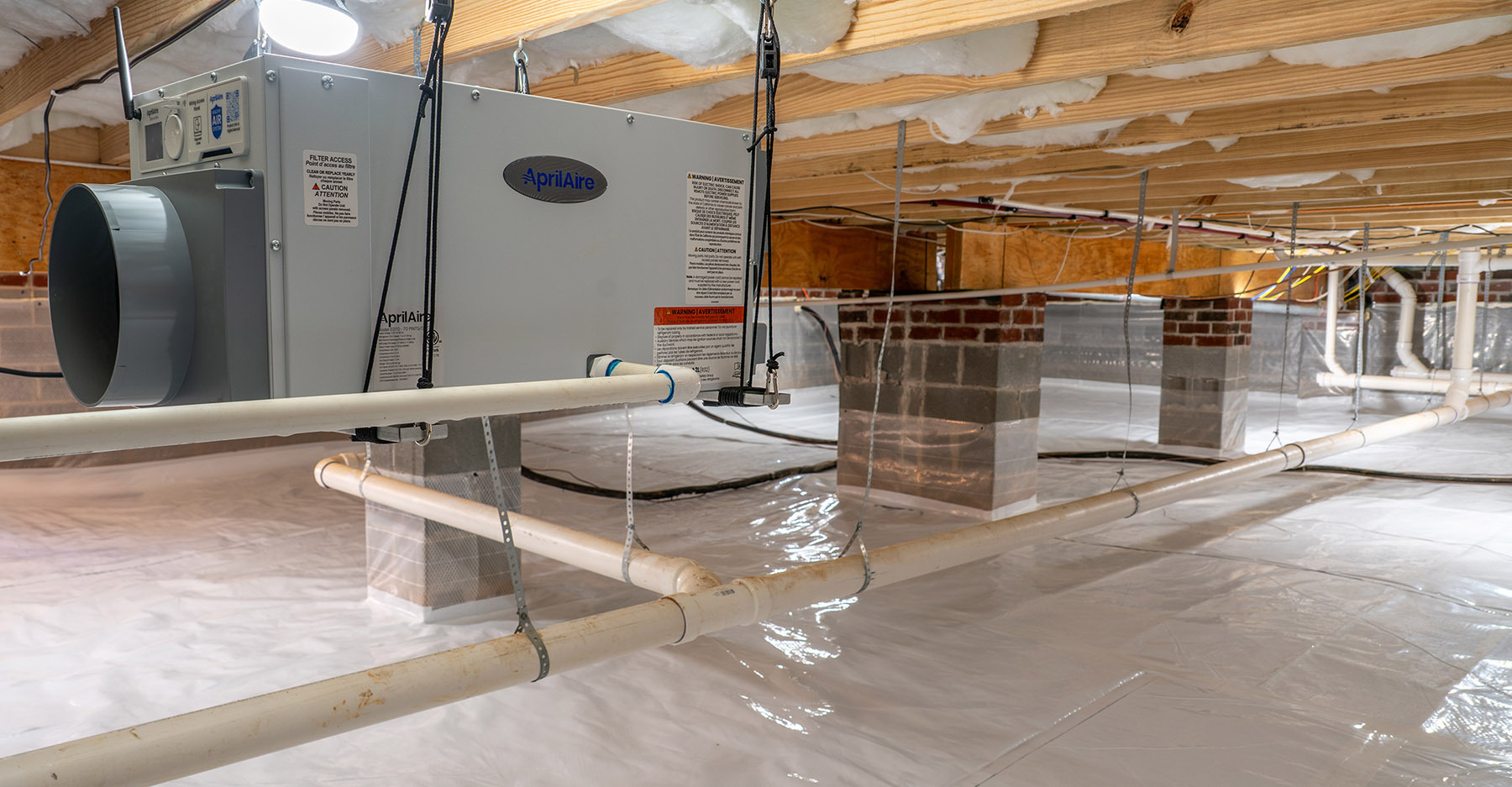
How to Choose the Right Crawl Space Dehumidifier
Selecting a crawl space dehumidifier is not just a matter of choosing the unit with the biggest water-removal capacity. (pints/day).
The right choice depends on the crawl space itself. A damp vented crawl space with open foundation vents is a very different job from a clean encapsulated crawl space with a full vapor barrier, corrected drainage, and an easy gravity drain route. Square footage matters, but so do humidity history, crawl space height, layout, drainage, service access, and how closely you want to monitor the system after installation.
This guide will help you decide whether a crawl space dehumidifier is the right drying method, what size class to consider, which features matter, and how AprilAire, Santa Fe, and Mega-Dry models fit common crawl space conditions.
Do You Need a Crawl Space Dehumidifier?
Many crawl spaces do need a dehumidifier, but the better question is whether the crawl space has a reliable drying method.
An encapsulated crawl space needs mechanical drying. For many homeowners, a dedicated crawl space dehumidifier is the clearest and most controllable option because it can run until its humidity set point is reached. In some homes, introducing a small, metered amount of conditioned air with a supply air inducer can also be a valid drying method when there is supply air ducts in the crawl space, the situation allows for it, and local code supports it.
The key point is simple: do not seal a crawl space, cover the ground, close off outside air, and then leave the enclosed crawl space with no way to dry the air.
If the crawl space is encapsulated
An encapsulated crawl space should include a drying method. A crawl space dehumidifier is often the most direct choice because it:
- Provides a set humidity target.
- Runs when the crawl space is above the set point.
- Does not depend on the home's HVAC system running.
- Can be paired with remote monitoring on some models.
- Gives homeowners and contractors a clear performance check.
HVAC supply air can make sense in some systems. If you decide to go that route, be sure the device is installed on the supply side of the HVAC duct. Do not use the return side to pull air from the crawl space.
If the crawl space is vented or vapor-barrier-only
A crawl space can have a vapor barrier and still be vented. In that case, humid outdoor air can continue entering through open foundation vents. A dehumidifier may run often and still struggle because it is trying to dry air that is being replaced by outdoor humidity.
If the crawl space is vented, the first question is not "How big should the dehumidifier be?" The first question is whether the crawl space should be properly encapsulated.
A crawl space vapor barrier is still essential. It blocks ground moisture, which is one of the biggest moisture sources under a home. But a vapor barrier alone does not actively dry the air and having vents open will leave you just trying to fight mother nature.
Warning signs that drying needs attention
Look closely at the crawl space to see if you notice:
- Musty odors.
- Condensation on ducts, pipes, framing, or insulation.
- Sweating HVAC ductwork (which is really just condensation).
- Damp or fallen insulation.
- Persistent high relative humidity readings.
- Standing water or active leaks.
- Damp wood or wood moisture concerns.
- Mold or mildew risk conditions.
- A crawl space that was encapsulated but still smells damp.
Standing water, plumbing leaks, and exterior drainage problems should be corrected before relying on a dehumidifier. A dehumidifier removes water vapor from air. It is not a substitute for fixing liquid water entry.
Vapor Barrier vs Dehumidifier: Different Jobs
A vapor barrier is not failing just because the crawl space still needs a dehumidifier.
The vapor barrier blocks moisture from the ground. Mechanical drying controls humidity in the enclosed air. Those are two separate jobs.
In a proper encapsulation project, the vapor barrier should cover exposed soil, overlap and tape seams, wrap piers, tie into the walls or wall vapor barrier, and work with sealed foundation vents and air sealing. That reduces the moisture load dramatically.
But moisture can still enter through:
- Small gaps or imperfect seam details.
- Foundation or site moisture.
- Bulk water problems.
- Plumbing leaks.
- Dryer vent leaks.
- HVAC problems.
- Damp materials already in the crawl space.
- Normal seasonal humidity pressure.
- Crawl space doors that aren't sealed well
Once the crawl space is enclosed, that moisture has fewer ways to leave. That is why mechanical drying matters.
The dehumidifier does not replace the vapor barrier either. If exposed soil, open vents, or standing water remain, the dehumidifier may be forced to fight moisture sources that should have been controlled first.
How to Choose the Right Crawl Space Dehumidifier Size
Square footage is the starting point. It is not the whole answer.
Use the ranges below as planning guidance, then compare the manufacturer's stated coverage, the crawl space condition, and the installation layout before choosing a model.
| Crawl Space Size | Practical Starting Point |
|---|---|
| Under 1,000 sq ft | 50 pint or 70 pint crawl space dehumidifier, depending on humidity and clearance |
| 1,000 to 2,200 sq ft | 70 to 75 pint class is often a practical starting point |
| 2,200 to 2,600 sq ft | 70 to 80 pint class may work, depending on moisture load and layout |
| 2,600 to 3,200 sq ft | 100 pint class or comparable high-capacity unit is often worth considering |
| Over 3,200 sq ft | Larger capacity, two dehumidifiers, or ducting may be needed |
These are not guarantees. A clean, encapsulated 2,000 square foot crawl space can be easier to dry than a smaller crawl space with open vents, standing water, and poor air movement.
Adjust for moisture load
Moisture load is the amount of moisture the system has to handle after major sources are addressed.
Consider more capacity, better air distribution, or a closer inspection when the crawl space has:
- High humidity readings over time.
- Musty smell or condensation.
- A humid climate.
- Damp foundation conditions.
- Poor exterior drainage.
- A partially sealed or vented condition.
- Long, divided, or obstructed layout.
- Is located in a region that has high relative humidity levels.
- An existing drying method that cannot keep up after encapsulation.
Do not assume a larger dehumidifier will solve everything. If one corner stays humid while the area near the dehumidifier is dry, the issue may be placement, airflow, ducting, or divided crawl space layout rather than raw pint capacity.
Check height, clearance, and layout
Crawl space height affects both air volume and equipment fit. A taller crawl space has a higher volume of air than a shorter crawl space with the same square footage. A very low crawl space can also rule out taller equipment, even if the unit has enough capacity on paper.
Layout matters too. Long, narrow, divided, or heavily obstructed crawl spaces may need:
- Strategic unit placement.
- A duct kit.
- Fan-assisted air movement.
- More than one unit.
- A different model shape.
The best crawl space dehumidifier is the one that can be installed, drained, serviced, and placed where it can actually move dry air through the crawl space. Be sure to measure your crawl space door and any other tight areas, then check the dimensions of the units you are considering to ensure they will fit through the door and in the area you are looking to install it.
Do not size only by pint rating
Pint ratings are useful, but they are not the whole decision. Testing conditions, crawl space temperature, airflow, efficiency, cabinet design, and coverage ratings all matter.
Compare:
- Pint capacity.
- Manufacturer coverage guidance.
- Airflow.
- Clearance and dimensions.
- Drainage options.
- Filter access.
- Warranty and service support.
- Whether the unit is designed for crawl space conditions.
A quality 70 pint crawl space dehumidifier may outperform a cheaper unit with a larger capacity if the cheaper unit is not built for the installation environment.
Also, do not expect a 70 pint or 100 pint dehumidifier to remove that exact amount of water every day after installation. Pint ratings are measured under controlled, consistently humid test conditions so units can be compared fairly. In a real crawl space, conditions change throughout the day and the dehumidifier should cycle off once it reaches the set point. As the crawl space dries and the relative humidity drops, the unit will remove less water than its listed daily capacity.
Drainage: Gravity Drain, Condensate Pump, or Built-In Pump?
Drainage should be planned before you buy.
A dehumidifier removes water from the air, and that water has to go somewhere. A great unit with no reliable drainage path is the wrong fit.
Gravity drain
A gravity drain is the simplest option when the drain line can slope continuously to a sump basin, floor drain, to daylight, or approved discharge point.
Gravity drainage has fewer parts to fail, but it still needs careful routing. The line should not kink, trap water, or discharge where it can create a new moisture problem.
Condensate pump
A separate condensate pump may be needed when water must move uphill, across distance, or to a discharge point that gravity cannot reach.
This is common in low crawl spaces where the dehumidifier cannot drain naturally to the right location. If a pump is required, make sure there is a sensible place for the pump, power, service access, and discharge line.
Built-in pump vs external pump
Some buyers look specifically for a crawl space dehumidifier with an internal condensate pump. While this is understandable, we recommend purchasing the dehumidifier and condensate pump separately. Units that have built in condensate pumps are convenient, but the pumps have very shallow reservoirs which cause them to cycle on and off much more frequently that can potentially reduce the life of the unit. Additionally, if the internal condensate pump stops working, it is much harder to repair or replace. An external pump allows for more flexibility, longer service life, and easier maintenance.
The practical rule is this: choose the drainage plan first, then choose a unit that supports it. At Crawlspace Depot, all of our dehumidifiers support both gravity drains and external condensate pumps.
Wi-Fi, Remote Monitoring, and Controls
Wi-Fi and remote monitoring matter because most homeowners rarely enter the crawl space after installation.
Remote visibility can help you check:
- Current humidity.
- Temperature.
- Set point.
- Whether the unit is operating.
- Alerts or service issues, depending on the system.
Wi-Fi can be especially useful for rental homes, vacation homes, second homes, or homeowners who want confidence without crawling under the house. It can also help contractors monitor performance after installation.
Wi-Fi does not eliminate maintenance. Filters still need cleaning or replacement. Drain lines still need to stay clear. The crawl space should still be inspected periodically for vapor barrier damage, water entry, pest activity, and equipment problems.
The Mega-Dry CS75 Wi-Fi Dehumidifier is a great option for homeowners who want built-in Wi-Fi visibility. Crawlspace Depot also carries AprilAire Wi-Fi models and accessories for buyers who prefer the AprilAire platform.
Crawl-Space-Rated vs Regular Household Dehumidifiers
A regular household dehumidifier is usually the wrong long-term fit for a crawl space.
Crawl spaces are low-clearance, dirty, humid, and often cooler than living spaces. They also need automatic drainage, durable construction, service access, and dependable operation in a place the homeowner may not inspect often.
A household unit may be tempting because it costs less upfront. But in a crawl space, the wrong unit can become a false economy if it:
- Does not fit the clearance.
- Needs a bucket emptied.
- Cannot drain automatically.
- Runs constantly.
- Has poor access for service.
- Fails early in a harsh environment.
- Does not move enough air through the crawl space.
- Does not automatically restart after a power outage.
Purpose-built crawl space dehumidifiers are designed for this work. They are easier to integrate into encapsulation projects and better suited for long-term moisture control. Auto-restart is especially important. If the power goes out and comes back on, the dehumidifier should automatically power back on with the same humidity set point it had before the outage. All crawl space dehumidifiers offered by Crawlspace Depot include this feature, but some cheaper living-space units may not.
Brand and Model Fit: AprilAire, Santa Fe, and Mega-Dry
There is no single best crawl space dehumidifier for every home. Model fit matters more than a universal ranking.
Crawlspace Depot carries professional-grade crawl space dehumidifiers from AprilAire, Santa Fe, and Mega-Dry. The right choice depends on size, clearance, drainage, monitoring preference, and budget.
AprilAire
AprilAire is a strong fit for homeowners and contractors who want a durable, professional-grade crawl space dehumidifier with simple operation and service support.
Useful examples include:
- AprilAire E050: a compact 50 pint option for smaller or tighter sealed crawl spaces.
- AprilAire E070: a popular 70 pint option for many encapsulated crawl spaces.
- AprilAire E080: an 80 pint step-up option where more capacity and quiet, efficient operation matter.
- AprilAire E100D: a 100 pint option for larger or higher-load applications.
All of these models are also available in separate Wi-Fi enabled models. Those models end in a "W". These can be connected to your wi-fi then controlled and monitored through the AprilAire Healthy Air app from anywhere your mobile device has internet connectivity.
AprilAire can be a good direction when the buyer values a proven platform, low maintenance, digital controls, corrosion-resistant coils, and available Wi-Fi model options.
Santa Fe
Santa Fe is a strong fit when crawl space installation conditions, low clearance, and filtration are high priorities.
The Santa Fe Compact70 is especially useful for low-clearance crawl spaces. Crawlspace Depot lists it as a 70 pint unit for crawl spaces up to 2,200 square feet, with a low-profile 12 inch design and gravity drain or external condensate pump options.
For larger applications, the Santa Fe Oasis105 is a larger Santa Fe option with higher capacity, strong airflow, ducting options, and crawl space sizing up to 3,300 square feet or 16,500 cubic feet.
Santa Fe can be a good direction when equipment fit, higher MERV filtration, ducting options, and larger-space performance matter.
Mega-Dry
Mega-Dry is a great model when Wi-Fi monitoring, high quality filtering and touch screen controls are a top priority.
The Mega-Dry CS75 Wi-Fi Dehumidifier is a 75 pint Wi-Fi enabled dehumidifier. Crawlspace Depot lists it for up to 3,000 square feet in an encapsulated crawl space environment with an average crawl space height. It has touchscreen digital controls, 180 CFM airflow without external ducting capabilities (duct collar sold separately), and a low-profile cabinet.
Mega-Dry can be a good fit for homeowners who want smartphone visibility and 75 pint class performance in one package.
How to choose between them
Use these questions to narrow the choice:
- How many square feet is the crawl space?
- Is the crawl space fully encapsulated?
- Is the crawl space low enough or the crawl space door tight enough that cabinet height matters?
- Is the layout open, divided, long, or obstructed?
- Can the unit gravity drain, or will it need a condensate pump?
- Is Wi-Fi monitoring important?
- Will the unit be easy to reach for filter service?
- Is the buyer trying to solve an average moisture load, a tight-space fit problem, or a larger-space capacity problem?
If two models look similar on capacity, choose based on installation fit and long-term serviceability.
Hanging a Dehumidifier vs Using Risers
A crawl space dehumidifier can sit on dehumidifier risers or be suspended with a hang kit when the model and installation conditions allow it. Either way, the unit should stay level so it can drain and operate properly.
Hanging a dehumidifier can provide more elevation for gravity drainage and keep the unit off the crawl space floor. It can also help in tight layouts where floor space is limited. Risers are usually easier, faster, and less expensive. They raise the unit enough to protect it from minor floor moisture and improve drain routing without adding the labor and setup of a suspended installation.
Installation Factors to Plan Before You Buy
A crawl space dehumidifier is not just an appliance purchase. It is part of a crawl space system.
Plan these details before ordering:
- Power: confirm there is an accessible outlet on a dedicated circuit. Do not plug a crawl space dehumidifier into an extension cord.
- Placement: choose a location with good access and air movement.
- Drainage: confirm gravity drain or condensate pump routing.
- Service access: leave room to clean or replace the filter.
- Clearance: confirm the unit fits through the access opening and in the crawl space.
- Support: decide whether the unit will sit on a riser or be installed with a hang kit.
- Noise and vibration: Although most units are quiet, avoid placement directly under bedrooms when possible.
- Ducting: consider a duct kit when the layout needs help moving air.
- Monitoring: decide whether a remote control, Wi-Fi model, or separate thermo-hygrometer is needed.
If a unit is hung from joists, vibration control matters. The dehumidifier should not transfer vibration into structural members in a way that creates noise complaints inside the home. Most hang kits are designed to have the strap or support ropes absorb most, if not all vibrations.
Before cleaning the filter, clearing the drain, or servicing the unit, unplug the dehumidifier first. This is good practice for any service work and is especially important if there is standing water nearby.
When to Hire a Contractor or Call Crawlspace Depot Before Buying
Some crawl spaces are straightforward. Others need more help before equipment is selected.
Call a qualified contractor when:
- There is standing water or recurring bulk water.
- The drain route is unclear.
- Electrical work is needed.
- The crawl space is unusually low, large, divided, or obstructed.
- There is visible fungal growth or damaged material.
- The crawl space has open vents and the homeowner is unsure about encapsulation.
- The homeowner is deciding between dehumidifier and HVAC supply air.
- One part of the crawl space is dry while another stays humid.
- The homeowner wants remote monitoring but is unsure which platform fits.
Crawlspace Depot can also help provide guidance on many common questions.
It is better to ask before buying than to install a unit that cannot drain, cannot be serviced, or cannot move air through the full crawl space.
Crawl Space Dehumidifier Decision Framework
Use this checklist before choosing a model:
- Is there standing water, a plumbing leak, or exterior drainage failure? Fix liquid water first.
- Is the crawl space vented, vapor-barrier-only, or encapsulated? Encapsulation reduces the moisture load.
- Is there a full crawl space vapor barrier with sealed seams and wrapped piers?
- What is the square footage?
- What is the approximate crawl space height?
- Is the layout open, divided, long, or obstructed?
- Are there warning signs such as musty odor, condensation, sweating ducts, or persistent high humidity?
- Can the dehumidifier gravity drain, or is a condensate pump needed?
- Is there power and enough access for service?
- Is Wi-Fi or remote monitoring important?
- Which model class fits the size, clearance, drainage route, and control preference?
For many average encapsulated crawl spaces, a 70 to 75 pint class unit is a practical starting point. Smaller, tighter spaces may fit a compact 50 pint model. Larger, wetter, taller, or harder-to-dry spaces may need 80 to 100+ pint class equipment, a larger Santa Fe model, ducting, or more than one unit.
Recommended Next Step
If you already know the crawl space is encapsulated, drainage is handled, and you have the square footage, start by comparing Crawlspace Depot's crawl space dehumidifiers.
If the crawl space has standing water, drainage issues, or an unclear installation path, contact Crawlspace Depot before choosing a unit.
FAQ
What size dehumidifier do I need for a crawl space?
Start with square footage, then adjust for encapsulation status, moisture load, crawl space height, layout, drainage, and airflow. For many average encapsulated crawl spaces, a 70 to 75 pint class unit is a practical starting point, but smaller or larger spaces may need a different fit.
Is a 70 pint dehumidifier enough for a crawl space?
Often, yes. A quality 70 pint crawl space dehumidifier can be a strong fit for many encapsulated crawl spaces, especially when the crawl space is within the manufacturer's coverage range and drainage issues have been corrected. It may not be enough for very large, wet, tall, divided, or poorly sealed crawl spaces.
Do I need a dehumidifier in an encapsulated crawl space?
An encapsulated crawl space needs mechanical drying. A crawl space dehumidifier is the most direct option for many homes. Properly introduced HVAC supply air through a supply air inducer can also be appropriate in some homes when installed correctly and allowed by local code.
Do I need a dehumidifier if I already have a vapor barrier?
Yes, or another approved form of mechanical drying. A vapor barrier blocks ground moisture, but it does not actively dry crawl space air. If the crawl space is encapsulated, mechanical drying should be part of the system. If the crawl space is still vented, open vents can keep bringing humid outdoor air into the crawl space which makes control, even with a dehumidifier very difficult..
Can I use a regular household dehumidifier in a crawl space?
A regular household dehumidifier is usually not the best long-term fit. Crawl spaces often need low-clearance equipment, automatic drainage, durable construction, and serviceability in a harsher environment than a living room.
What humidity should a crawl space dehumidifier be set to?
Many homeowners use a target around 50% to 55% relative humidity. The right setting depends on climate, crawl space conditions, and how the unit cycles. The goal is stable moisture control, not the lowest possible number. Over drying can create other problems in some situations.
Do I need a crawl space dehumidifier with a pump?
You need a pump if the dehumidifier cannot gravity drain to a suitable location. If water must move uphill or across distance, plan for a condensate pump or choose a setup that supports the drainage route.
Is Wi-Fi worth it for a crawl space dehumidifier?
Wi-Fi can be worth it if you want remote visibility, own a rental or second home, rarely enter the crawl space, or want alerts and app-based control where supported. It does not replace filter service, drain checks, or periodic crawl space inspections.
Should a crawl space dehumidifier run all year?
It should run when the crawl space humidity is above the set point. In humid seasons it may run more often. In drier or colder periods it may run less. If it runs constantly and never reaches the set point, check the sizing, drainage, air sealing, vapor barrier, and moisture sources.
Can I use HVAC supply air instead of a dehumidifier?
Sometimes. A supply air inducer can introduce a measured amount of HVAC supply air into an encapsulated crawl space. It should be installed on the supply side only, not the return side. It depends on normal HVAC operation and does not provide the same direct humidity set point as a dehumidifier.
Should I fix drainage before installing a dehumidifier?
Yes. Correct standing water, plumbing leaks, and exterior drainage problems first. A dehumidifier handles moisture in the air. It is not the right tool for ongoing liquid water entry.
Where should a crawl space dehumidifier be installed?
Install it where it can move air effectively, drain reliably, and be reached for service. Avoid locations that make filter access difficult or transfer vibration into the home. In long or divided crawl spaces, placement and air distribution may matter as much as capacity.
Related Products